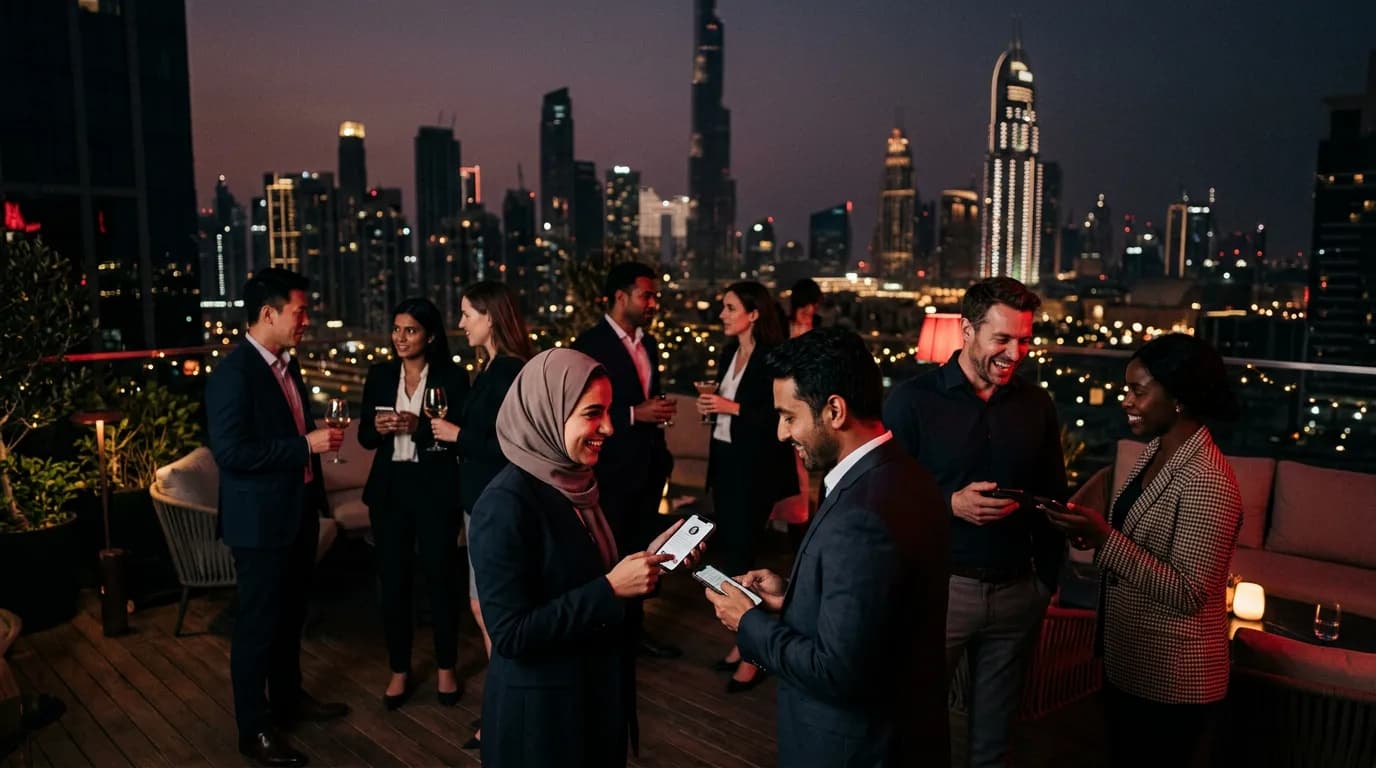
The UAE hosts a constant flow of conferences, exhibitions, investor gatherings, trade shows, founder meetups and industry events. These environments create valuable opportunities, but simply attending does not guarantee meaningful connections.
Many professionals leave events with a collection of business cards, LinkedIn requests and names they can barely remember. The most effective networkers approach events differently. They prepare with intention, hold better conversations, capture useful context and follow up while the interaction is still fresh.
Successful networking is not about speaking to the largest number of people. It is about creating a smaller number of relevant connections that have a reason to continue. This guide explains how to network more effectively at business events in Dubai, Abu Dhabi and across the UAE, and how to make sure the people you meet remember you afterwards.
Before the event: decide what success looks like
Walking into an event without a clear objective often leads to random conversations and weak results. Before attending, decide what would make the event worthwhile.
Your objective could be to:
- Meet potential clients
- Find strategic partners
- Connect with investors
- Identify suppliers
- Learn from industry experts
- Build relationships with peers
- Explore career opportunities
- Introduce your company to a new market
- Reconnect with existing contacts
Try to make the goal specific. “Meet useful people” is too broad. “Speak with three hospitality operators who are exploring customer-experience technology” gives you direction without turning every conversation into a sales pitch.
Research the event before you arrive
Good networking often begins before the event itself. Review the event website, speaker list, exhibitors, sponsors and agenda. Search for people or companies that are especially relevant to your goals.
Create a short priority list:
- Five people you would genuinely like to meet
- Three companies you want to understand better
- Two sessions where relevant attendees are likely to gather
- One existing contact you can reconnect with
This preparation makes it easier to recognise opportunities when the event becomes busy. It also gives you better opening lines. Instead of saying “So, what does your company do?” you could say:
The second question shows preparation and invites a more meaningful response.
Prepare a clear professional introduction
At a busy event, you may have only a few seconds to explain who you are. Avoid giving a long career summary. Use a short introduction that gives the other person enough context to continue the conversation. A useful structure is:
- Who you are
- What you do
- Who you help / what you solve
For example:
The goal is not to explain everything. It is to make your work easy to understand and create a natural opening for questions. Avoid introductions filled with vague language such as “we provide innovative solutions”, “we are transforming the ecosystem” or “we offer end-to-end services”. Specific language is easier to remember.
Start conversations naturally
Many people find starting conversations more difficult than continuing them. At UAE business events, attendees often come from different countries, industries and professional cultures. Simple, context-based questions are usually the easiest way to begin.
Useful conversation starters include:
- “What brought you to this event?”
- “Which session has been most useful so far?”
- “Are you based in the UAE or visiting for the event?”
- “What are you hoping to learn or find today?”
- “How are you connected to this industry?”
- “What trends are you seeing in your market?”
These questions are open enough to create a conversation without feeling intrusive. Avoid beginning with a hard sales pitch. Most people decide whether they trust and enjoy speaking with you before they become interested in your product or service.
Ask questions people enjoy answering
Memorable networkers are rarely the people who speak the most. They are often the people who ask thoughtful questions and listen carefully. Move beyond basic questions about job titles. Try asking:
- “What are you currently focused on?”
- “What is changing fastest in your industry?”
- “What challenge is your team trying to solve this year?”
- “What kind of partnerships are most valuable to you?”
- “What opportunities are you seeing in the UAE?”
- “What are you excited about next?”
These questions help you understand the person rather than merely collect their details. They also reveal whether there is a genuine reason to continue the relationship.
Do not treat every conversation as a sales opportunity
One of the fastest ways to become forgettable is to turn every introduction into a pitch. Networking is broader than selling. The person you meet may become:
- • A client
- • A referral partner
- • A collaborator
- • A source of advice
- • A future colleague
- • Someone who introduces you to the right person later
Trying to force immediate commercial value can weaken a relationship before it begins. Instead, focus on relevance. Ask yourself: do we share an interest? Could I help this person? Could they help me? Is there a clear reason to reconnect? A good conversation does not always need an immediate outcome.
Use the Linkist Event Connection Framework
A practical event-networking process can be organised into five stages:
- Prepare
- Introduce
- Exchange
- Capture context
- Follow up
- Prepare: Understand the event, define your objectives and identify the people or industries most relevant to you.
- Introduce: Explain clearly who you are and what you do without delivering a long pitch.
- Exchange: Share contact details in a way that is quick, professional and easy for the other person to access later.
- Capture context: Record where you met, what you discussed and why the person may be relevant.
- Follow up: Reconnect with a personalised message while the interaction is still memorable.
Exchange details without interrupting the conversation
The exchange of details should feel like a natural continuation of the discussion. You might say “Let’s stay connected”, “I’ll send you the resource we discussed” or “Let me share my details with you”.
You can exchange details through:
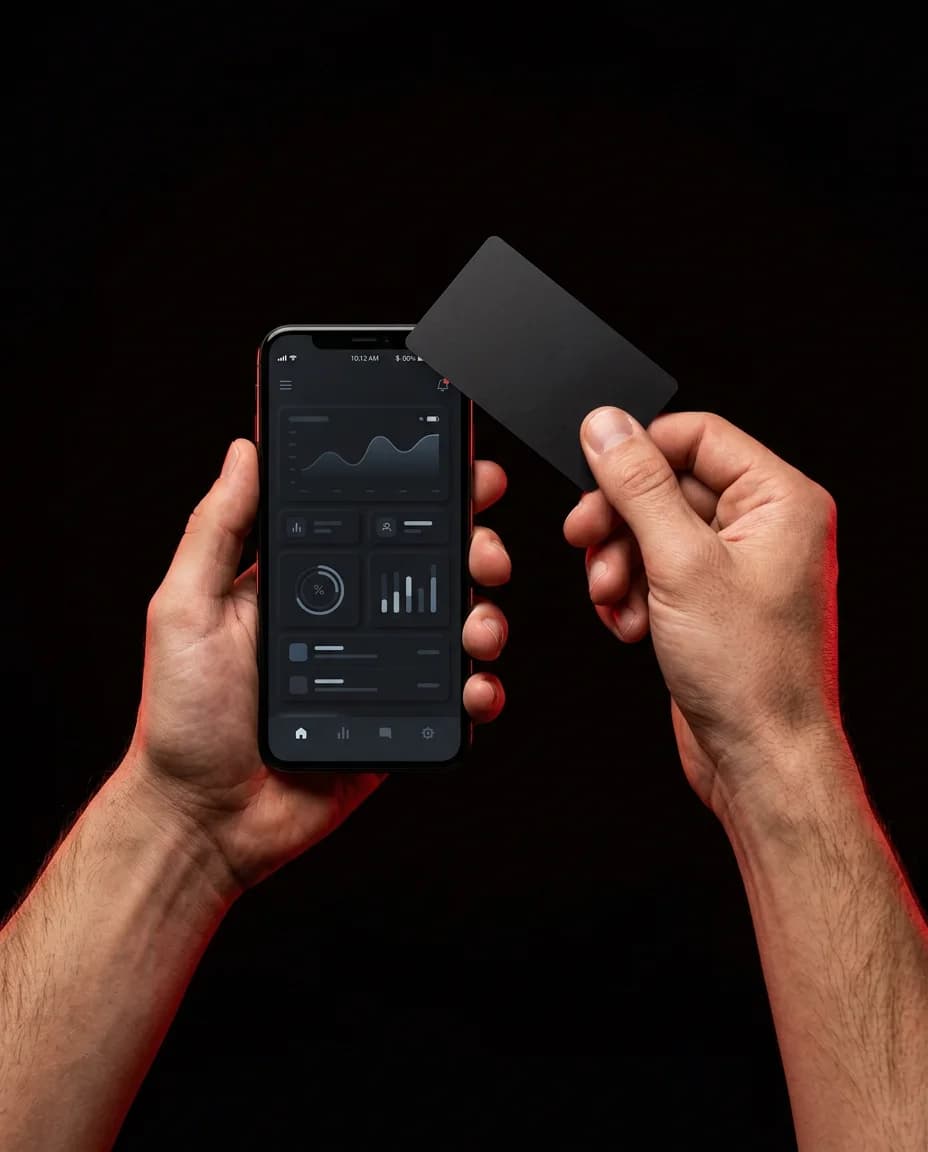
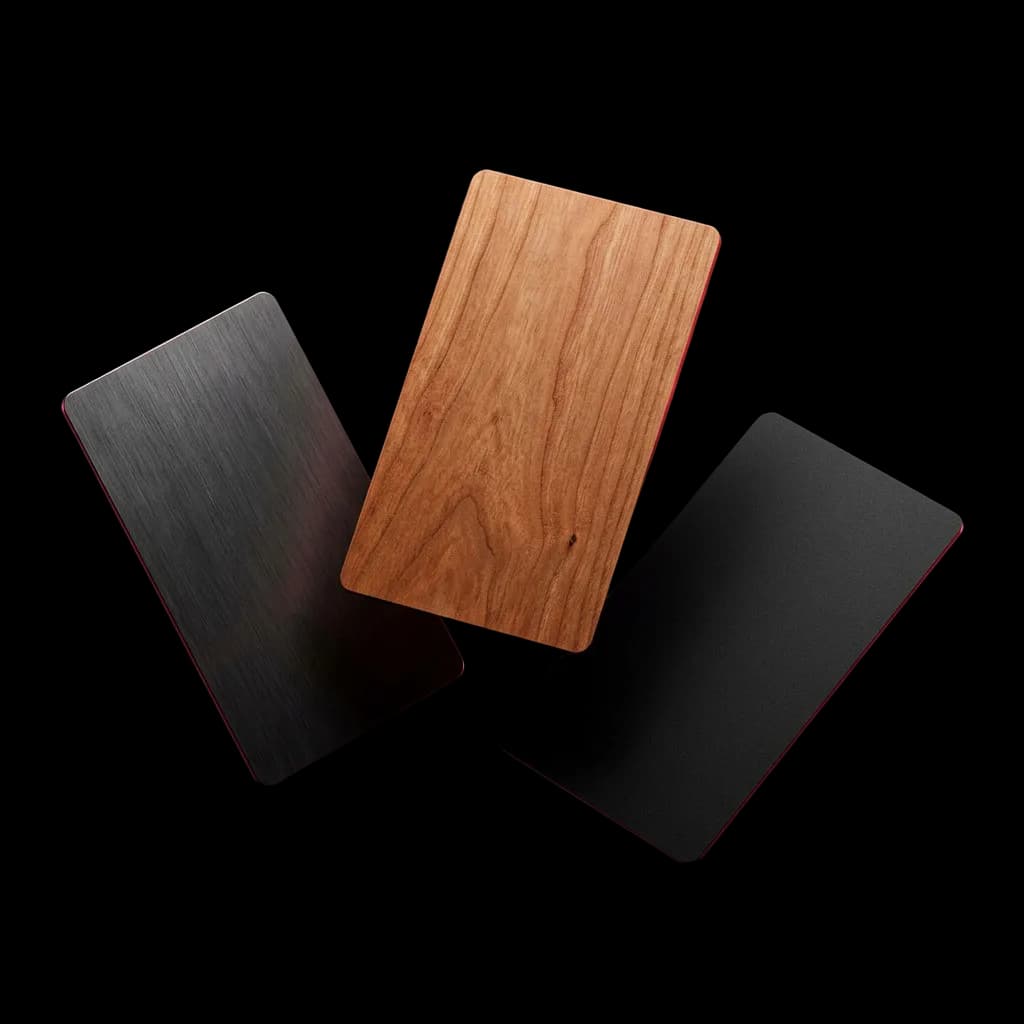
- Digital business card
A tap or link opens your full profile instantly.
- NFC card & QR code
Perfect for in-person, face-to-face exchanges.
- LinkedIn, email or WhatsApp
Ideal for remote and cross-border follow-ups.
The method matters less than the outcome: both people should know why they are connecting and what may happen next. Avoid collecting details without context. A contact list filled with unfamiliar names has little value.
Record the context immediately
After several conversations, people begin to blend. Take a few seconds after each important interaction to record where you met, what you discussed, the person’s main area of interest, any challenge or opportunity they mentioned, and the best reason to follow up.
This note is far more useful than a name and phone number alone. Context helps you send a better follow-up and prevents you from asking the person to repeat the entire conversation.
Make yourself easier to remember
People remember clarity, relevance and how a conversation made them feel. You do not need an exaggerated pitch or attention-seeking introduction. You can become more memorable by:
- • Explaining your work clearly
- • Asking thoughtful questions
- • Sharing one useful insight
- • Offering a relevant introduction
- • Keeping promises
- • Following up with context
A useful mental test is: if this person describes me tomorrow, what will they say? Ideally, the answer should be more specific than “I met someone from a technology company.” A stronger answer would be “I met someone building a platform that helps professionals manage relationships after networking events.” Clarity creates memorability.
Know when to end a conversation
Good networking also involves moving on gracefully. At a busy event, neither person should feel trapped in one conversation. You can close politely by saying:
- “It was great meeting you. I’ll send you the information we discussed.”
- “I’ll let you continue exploring the event, but let’s stay connected.”
- “There are a few people I still need to meet, so let’s exchange details.”
A respectful ending leaves a better impression than allowing the conversation to fade awkwardly.
Follow up while the conversation is still fresh
The value of an event usually appears after the event. Send a short, personalised follow-up within a reasonable period while the person still remembers the interaction. A useful message includes a reminder of where you met, a specific reference to the conversation, and the promised next step or a reason to reconnect.
This is stronger than “Great meeting you. Let’s stay connected.”, which gives the recipient no reason to respond.
Common networking mistakes to avoid
| Mistake | Why it hurts |
|---|---|
| Trying to meet everyone | A few relevant conversations beat dozens of rushed introductions. |
| Speaking only about yourself | A conversation should not feel like a presentation. |
| Pitching too early | Understand the person before deciding whether your offer is relevant. |
| Collecting contacts without context | A large contact list is not the same as a valuable network. |
| Failing to follow up | An introduction that is never continued rarely creates an opportunity. |
| Sending generic messages | Personalisation shows you remember and value the connection. |
| Forgetting your promises | If you offer an introduction or resource, follow through. Reliability is memorable. |
Your UAE business-event checklist
Before the event
- Define your objective
- Review the agenda
- Research speakers and exhibitors
- Identify priority contacts
- Prepare your introduction
- Update your professional profile
- Confirm that your contact-sharing method works
During the event
- Start conversations with context
- Ask thoughtful questions
- Listen for relevance
- Avoid immediate pitching
- Exchange details naturally
- Record useful context
- End conversations respectfully
After the event
- Review your new contacts
- Prioritise the most relevant relationships
- Send personalised follow-ups
- Complete any promises
- Continue the relationship with a genuine reason
Frequently asked questions
How do I prepare for a networking event in Dubai?
Define your objective, review the event agenda, research speakers and exhibitors, identify relevant people and prepare a short professional introduction.
What should I say when meeting someone at a business event?
Start with a simple question related to the event, their industry or what brought them there. Avoid beginning with a sales pitch.
How many people should I try to meet?
Focus on quality rather than a fixed number. Three meaningful and relevant conversations may be more valuable than thirty brief introductions.
How can I make people remember me after an event?
Be clear about what you do, ask thoughtful questions, share something useful, record the context and send a personalised follow-up.
Should I connect on LinkedIn immediately?
You can connect during or after the event, but include a personal note referencing where you met and what you discussed.
When should I follow up after a networking event?
Follow up while the interaction is still fresh. The appropriate timing depends on the context, but avoid waiting so long that the person no longer remembers the conversation.
Are digital business cards useful at UAE networking events?
Yes. They allow professionals to share contact information and a digital profile quickly through NFC, QR code or a direct link.