
A professional introduction often begins with a simple exchange. A handshake. A short conversation. A card tap. A QR scan. A LinkedIn request. A WhatsApp message.
The exchange itself may take less than a minute, but the opportunity behind it may take weeks, months or even years to develop. This makes what happens after the first exchange, how quickly you share your details and remember the context, the most important part of modern networking.
Near Field Communication (NFC) makes the first step easier. A smart card can open a professional profile instantly on someone’s phone. But NFC alone does not remember the conversation, identify relevance, suggest next steps or help you follow up with the right message.
That gap is what Artificial Intelligence can now bridge. The use of AI here is not a gimmick or a stand-in for an automatic message machine, and it is definitely not a replacement for human judgement. Used well, AI can help professionals preserve context, recognise important connections and follow up with more relevance.
The tap is only the beginning
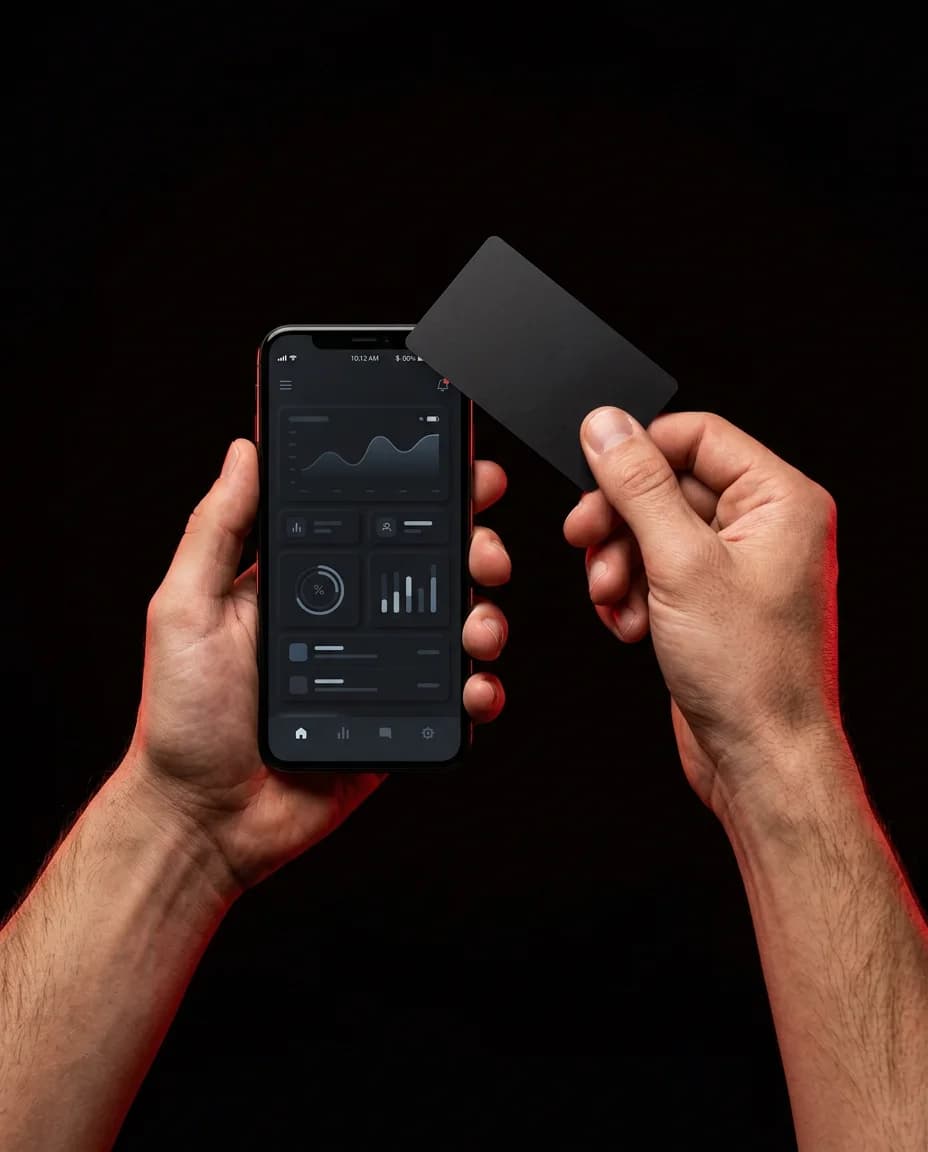
An NFC card is a simple and powerful bridge between the physical and digital world. When someone taps an NFC-enabled card with a compatible smartphone, the card can open a digital profile, contact page, website, form or another online destination.
For professionals, this creates a smoother introduction. Instead of handing over a paper card that may be lost or typing details manually into a phone, the recipient can immediately view a live professional profile.
But the tap itself is not the intelligence. The tap answers one question:
The more valuable questions come afterwards:
- Who did I meet?
- Where did we meet?
- What did we discuss?
- Why does this person matter?
- What should I do next?
- When should I reconnect?
- What would make the follow-up useful?
These are context questions that form the bulk of the relevance and the usefulness of a contact. A smarter networking system should therefore treat NFC as the trigger, not the entire product.
What happens after an NFC tap?
A useful smart networking experience may include several stages.
- Profile opens
- Recipient acts
- Interaction is recorded
- Context is added
- AI organises it
- The profile opens: the recipient sees who the person is, what they do, how to contact them and which links or actions are relevant.
- The recipient acts: they may save the contact, send their own details, submit an enquiry or continue the conversation through another channel.
- The interaction creates a record: the source of the connection, the time, the sharing method and any information voluntarily exchanged.
- The professional adds context: a short note, a voice memo, a tag, a meeting location, an event name or a reminder.
- AI helps organise that information into something useful.
Here a smart card begins to become part of a smarter relationship workflow. Without this layer, an NFC card is only a faster doorway. With this layer, the tap can become the start of a remembered relationship, a much more productive way to manage a contact.
Why context is the missing data layer in networking
Most contact systems are built around static details: name, company, job title, email, phone number, website, LinkedIn profile. Those fields are useful, but they do not explain the relationship.
For example, two contacts may both be founders. One may be a potential customer. One may be a possible investor. One may have asked for an introduction. One may have mentioned an expansion plan. One may have no immediate relevance but could become important later. The difference here is context.
Context may include:
- • Where the interaction happened
- • Who introduced the person
- • What problem they mentioned
- • What opportunity was discussed
- • What was promised
- • Whether the timing was immediate or long term
This is information professionals usually try to memorise or store in notebook apps, WhatsApp chats, email threads or scattered spreadsheets. The problem is that memory weakens quickly when meetings stack up. After a busy event, investor meeting, sales visit or conference, even a highly organised professional may struggle to recall which conversation mattered most.
AI can act as your personal assistant, turning fragmented signals into structured context.
What AI can actually do in smarter networking
The phrase “AI-powered networking” can sound vague if it is not explained properly. A practical system does not promise magic; it should perform clear jobs that reduce manual effort and improve follow-through.
1. Clean and structure contact information
Contact data often arrives in messy formats. One person writes their title as “Founder & CEO”. Another writes “Managing Partner”. Company names may appear differently across emails, websites and social profiles. AI can help standardise this information so contacts are easier to search, filter and understand, classifying job function, seniority, industry, company type, region and possible relevance. The best systems allow users to review and correct AI-generated fields; a wrong classification can be worse than no classification at all.
2. Capture meeting context
That single note gives far more value than a phone number. AI can help convert short notes, voice memos or quick prompts into a structured contact summary, identifying meeting location, conversation topic, potential need, promised follow-up, suggested next action and relevant tags.
3. Identify relevance
Not every new contact deserves the same level of attention. A professional may meet twenty people in one afternoon: some immediately relevant, some useful later, some simply pleasant conversations with no obvious next step. AI can help prioritise contacts based on defined goals, using concepts such as Ideal Customer Profile, role matching, industry matching and relationship scoring. The point is not to reduce people to scores, but to give contacts layers and depth so valuable conversations do not disappear into a flat contact list.
4. Suggest the next best action
A contact record becomes more useful when it leads to action. AI can help suggest:
- Send the promised brochure
- Follow up after the event
- Reconnect in two weeks
- Introduce this person to a colleague
- Schedule a reminder before the next meeting
A traditional contact book tells you how to reach someone. A smarter system helps you decide why, when and how to reach out.
5. Draft a more relevant follow-up
Generic follow-up messages are easy to ignore.
This is polite, but it gives the recipient very little reason to respond. A better follow-up refers to the actual conversation:
When AI saves the context of your contact, it can help draft messages that carry the relevant details and get a suitable response; you review and edit rather than dig through memory. Sincerity cannot be outsourced entirely; a message that pretends to be personal while feeling automated does more harm than good. The strongest use of AI is not to send more messages. It is to send better ones.
6. Remind at the right time
Timing is one of the most overlooked parts of relationship-building. Following up too late can feel cold. Too often can feel pushy. Without a reason can feel empty. A context-aware system can help professionals reconnect at more appropriate moments, based on a promised action, a meeting date, event timing, contact priority or a known business milestone.
What useful relationship context should help you remember
A useful contact record should not read like a technical specification. It should help a professional remember enough about a meeting to continue the relationship thoughtfully:
- Who is this person?
- How did we meet?
- What made the conversation relevant?
- Was anything promised or discussed as a possible next step?
- Is there a clear reason to reconnect?
- When would a follow-up feel useful rather than forced?
That single note is more useful than a long list of disconnected fields because it explains why the person matters and what should happen next. The aim is not to turn every introduction into a complex database entry; it is to make important relationships easier to recognise, continue and act on with judgement.
Why NFC and AI work well together
NFC is valuable because it removes friction at the moment of introduction. AI is valuable because it can help professionals make better use of the context that follows. The two technologies solve different parts of the same networking problem.
| NFC supports the exchange | AI supports what happens later |
|---|---|
| Opens a live professional profile quickly | Makes notes and context easier to organise |
| Reduces manual typing and entry errors | Helps you remember why a conversation mattered |
| Creates a smoother in-person experience | Supports more relevant follow-up timing |
| Makes the first interaction feel polished | Reduces the mental load of many new introductions |
A tap may start the interaction. Context gives the interaction a chance to continue and possibly flourish.
AI should support judgement, not replace it
This is an important boundary. AI should not make professional relationships feel automated, impersonal or invasive. A useful AI-enabled networking experience should support human judgement, helping professionals remember, organise and prepare, while leaving the final decision, tone and timing with the person using the tool.
Good principles include:
- Keep users in control of what is saved, edited and shared
- Make recommendations understandable rather than mysterious
- Avoid unnecessary personal or sensitive information
- Use reminders to support thoughtful action, not pressure constant outreach
- Treat AI-generated communication as a draft, not a substitute for sincerity
A practical example: from quick exchange to thoughtful follow-up
Imagine a founder attending a business event in Dubai. She meets several people during the day, including a potential partner from a logistics company. They have a short but useful conversation about cross-border fulfilment, delivery timelines and customer expectations. Details are exchanged quickly, and the conversation moves on because events rarely wait politely for anyone.
Later, instead of relying entirely on memory, the founder records a short note about the discussion. That note helps her remember the setting, the topic and the reason the contact may be worth continuing.
A smart networking tool could then help her prepare a more relevant follow-up by reminding her what was discussed and helping her shape the message. The final message would still sound like her, reflecting her judgement, her tone and the genuine context of the conversation.
Why this matters for teams
For individuals, smarter follow-up helps preserve personal opportunities. For teams, the value can be broader. In many organisations, relationship knowledge lives inside individual phones, inboxes, notebooks and memories. When someone changes role, becomes unavailable or leaves the company, useful context can disappear with them.
- Sales teams
May lose the background behind a promising introduction.
- Founders
May not know which investor or partner conversations have already happened.
- Recruiters
May forget a strong candidate from an earlier conversation.
- Consultants
May miss a referral opportunity because context was never captured.
This does not mean every contact should become company property; that would be neither practical nor trustworthy. However, for business relationships that clearly belong to a team workflow, preserving appropriate context can help organisations avoid starting from zero every time responsibility changes hands. For teams, the smart follow-up goal is continuity, not surveillance.
What to look for in an AI-enabled networking tool
When evaluating a smart networking platform, do not look only at the physical card design. The card matters, but the experience after the exchange matters more. Consider whether the platform helps with the following:
- Simple sharing: can professionals share their identity through NFC, QR codes and direct profile links?
- Current information: can profile details be updated without replacing the physical card?
- Useful memory: does the experience help users preserve the context of important interactions?
- Better follow-up: does it support timely, relevant follow-up rather than generic outreach?
- User control: are AI suggestions reviewable and editable?
- Privacy: are permissions, visibility and data use clear?
- Professional trust: does it support better human interaction rather than replacing it?
- Team readiness: can it support consistency as more people in an organisation adopt it?
From smart card to smarter relationship-building
A modern professional does not need another place to store forgotten contact details. They need a better way to remember the right people, preserve meaningful context and act at the right time.
An NFC card makes the first exchange faster and more polished. AI can make the next step more intentional. Together, they point towards a more thoughtful model of networking, where the introduction is not treated as the end of the process but as the beginning of a relationship that may develop over time.
- Tap
- Context captured
- AI organises it
- Relevant follow-up
- Relationship grows
This is the shift behind smarter networking platforms such as Linkist: moving beyond simple contact exchange towards a more intentional way to share identity, remember context and build professional relationships with purpose. The card starts the connection. The context keeps it alive.
Frequently asked questions
Does AI replace professional networking?
No. AI should support professional networking by helping users organise information, remember useful context and prepare better follow-ups. It should not replace judgement, sincerity or genuine relationship-building.
What does NFC add to networking?
NFC makes the first exchange faster. A smart card can open a live digital profile on a compatible smartphone, helping professionals share their identity without relying only on paper cards or manual typing.
Does an NFC card store all my personal data?
In most smart-card experiences, the card points to a digital destination, such as a profile link. The editable information usually lives online rather than directly on the card. The exact setup depends on the platform.
How can AI help without becoming intrusive?
AI is most useful when it helps with practical tasks such as organising notes, improving recall, supporting follow-up timing and assisting with drafts. It should avoid unnecessary personal data and keep users in control.
Why is context more important than contact details?
Contact details help you reach someone. Context helps you understand why you are reaching out and what would make the next interaction useful. Without context, a professional network can quickly become a list of names with little practical value.
What should I record after an important conversation?
A short note is often enough. Record where you met, what you discussed, why the conversation was relevant, anything you promised to do and when a follow-up may be appropriate.
Can teams benefit from smarter networking systems?
Yes. Teams can benefit when appropriate business relationship context is easier to preserve and pass forward. This should be done with clear permissions, privacy controls and respect for professional boundaries.
What should professionals look for when choosing a smart networking tool?
Look for a tool that makes sharing easy, keeps information current, supports useful follow-up, respects privacy and helps build relationships rather than simply storing contacts.